
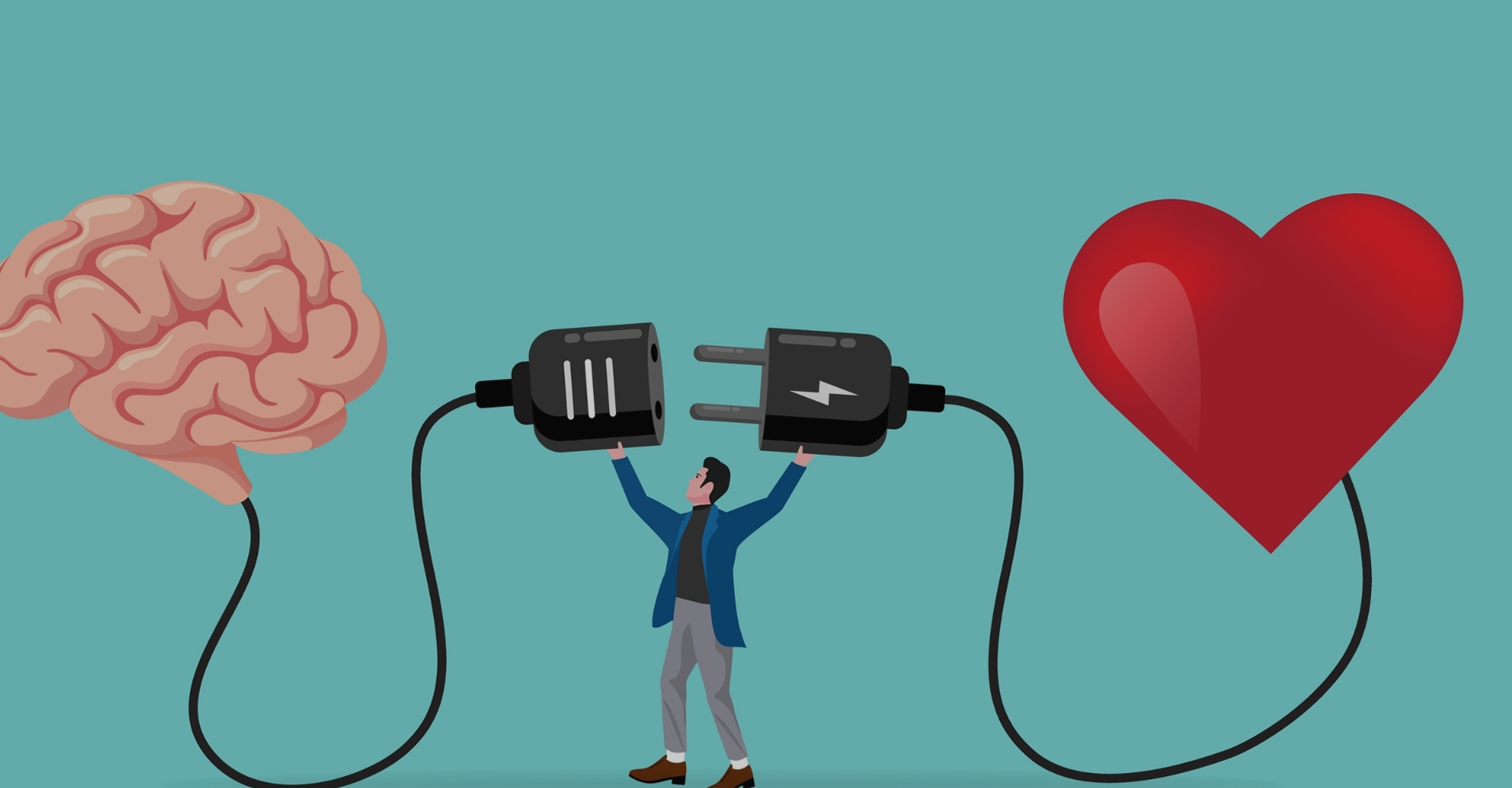
How to Write Copy That Speaks to the Brain, the Heart, and the Gut
Words are cunning little buggers. They slip into your subconscious, unpack their bags, and settle right in—soothing, convincing, or quietly rearranging your thoughts while you think you’re just “skimming.”
Every word we write starts something inside the reader: a feeling, a spark, a sense of connection.
Like a good speech, excellent copy doesn’t just sell—it stirs.
The Science Behind the Spark
Here’s the fascinating part: our brains don’t just read words—they feel them.
When we encounter emotionally charged or sensory language, it activates the limbic system, the brain’s center for emotions, including pain, pleasure, motivation, and memory.
Words don’t sit on a page; they travel through the nervous system like little tributaries of emotion.
That’s why the correct phrase can make your heart race (“Limited time offer”) or calm it (“You’re in good hands”).
The best copywriting lives where language meets psychology. It’s not about using psychology to trick people—it’s about using it to connect.
Step 1: The Emotional Hook—Tap the Heart Before the Head
People often make emotional decisions and then rationalize them with logic.
Behavioral economist Dan Ariely discovered that our emotional reactions influence almost every purchase decision—and logic comes later to justify it.
So, your first task as a writer is to evoke an emotional response in your reader.
Instead of writing about features—
“Our software makes your life easier.”
Try writing for impact—
“At last—software that makes those chaotic Monday mornings easier to bear.” Emotion draws readers in; logic convinces them to stay.
Pro tip: Ask yourself, “What do I want my reader to feel after reading this?” Safe? Smart? Inspired? Supported? Then write toward that emotion.
Step 2: The Power of Positive Framing
Humans are wired to avoid pain, but we’re strongly motivated by pleasure.
Instead of writing from fear—
“Don’t lose your customers!”
Flip it toward hope—
“Keep your customers coming back.”
That subtle shift changes everything.
Fear-based copy can trigger defensiveness. Positive framing activates hope—and hope inspires action.
Psychologist Dr. Robert Cialdini, author of Influence, reminds us that positive associations foster trust, whereas negative ones lead only to short-term compliance.
So, sell possibility, not panic.
Step 3: Familiar Words Build Instant Trust
Here’s a comforting truth from cognitive linguistics: the brain processes familiar words faster—and faster processing feels safer and more truthful.
So skip the jargon. Say “use” instead of “utilize.” “Help” instead of “facilitate.” “Make work for you” instead of “leverage.”
When people instantly understand your words, they don’t just read faster—they relax.
And relaxed readers? They’re more likely to trust you.
Step 4: Mirror the Reader’s Mind
Humans naturally mirror one another’s speech patterns—it’s a key way we build rapport.
If your audience says, “I’m overwhelmed by choices,” echo that language:
“If you’re overwhelmed by choices, here’s what works.”
That simple reflection tells readers, “I hear you.” And when readers feel heard, they lean in.
Step 5: The Rhythm of Persuasion
Some sentences dance; others trip. That’s rhythm—and it matters.
Our brains love patterns. Short sentences create a smooth flow and maintain attention.
For example:
“You don’t need more hours in the day. Using the right words will save you time.”
”See how that line moves? Rhythm isn’t decoration—it’s persuasion set to tempo.
When words are well-chosen and feel good to read, people trust what they say.
Step 6: The Magic of Sensory Words
Paint pictures your readers can feel.
Two decades of research at Emory University have found that sensory words, such as rough, smooth, bright, and warm, activate the brain’s sensory cortex—the same area involved in touch, taste, and sight.
That’s why “a warm welcome” feels warmer than “a nice greeting.” Engage the senses, and your message lingers.
Try it:
“Pour your first cup of calm.”
“Build a business that feels light, steady, and grounded.”
When readers can imagine your words, they don’t just understand your message— they experience it.
Step 7: The Principle of Reciprocity
Here’s another psychological truth: people respond in kind.
When you offer value first—insight, humor, education—they instinctively want to return the favor.
So give before you ask. Teach before you sell. Serve before you pitch.
When your copy helps someone—even just a little—they’ll remember it when it’s time to make a purchase.
Reciprocity isn’t manipulation. It’s simply the golden rule written in ink.
Closing Thoughts: Words as Emotional Architecture
Today, good writing isn’t about repeating information—it’s about building emotional structure.
The psychology of words that move people comes down to this:
- Write to their hearts, not just their heads
- Use their language, not your industry jargon
- Build trust with rhythm, empathy, and respect
Because once your words awaken emotion, your readers are already moving— long before they ever click “buy.” Sources
- Ariely, D. (2008). Predictably Irrational: The Hidden Forces That Shape Our Decisions.
- Cialdini, R. B. (1984). Influence: The Psychology of Persuasion. Harper Business.
- Bergen, B. (2012). Louder Than Words: The New Science of How the Mind Makes Meaning. Basic Books.
- Emory University (2014). Sensory Language and Neural Response Study.

